ILLEGAL CRABBING | Are soft shell crabs sold in Perth restaurants caught illegally?
Are undersized blue swimmer crabs regarded as illegal catch, ending up on Chinese restaurant menus across Perth, masqueraded as soft shell crab?

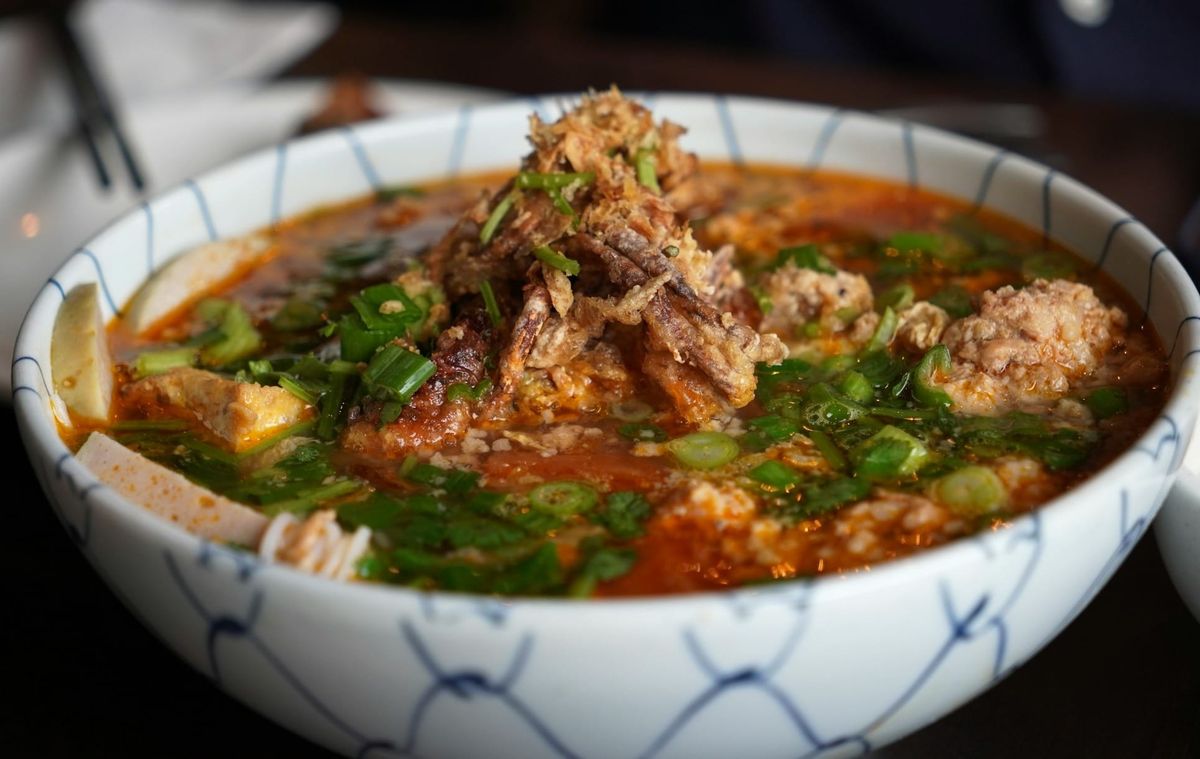
Crab and sweet corn soup. Minced crab. Whole baby crabs deep-fried at restaurants from Mount Lawley to Mandurah.
WTV Now decided to investigate the question that almost no one in Perth's restaurant industry seems willing to answer plainly: when you order soft shell crab in a Chinese restaurant, are you actually eating a juvenile crab? The same that are deemed illegal catch in Australia?
The answer, according to peer-reviewed scientific research and global seafood trade data, is more nuanced — and more uncomfortable — than the industry's marketing language suggests.
What soft shell crab really is
The textbook definition is simple. Soft shell crab is a culinary term for a crab that has recently moulted its old exoskeleton and not yet hardened its new one.
The window is brief — a few hours at most — during which the entire crab, shell and all, becomes edible.
But the textbook glosses over a critical detail.
A 2022 study published in the Frontiers for Young Minds scientific journal lays out the production process in unusually direct language:
"Crabs that have not yet matured (called sub-adult crabs) are commonly collected from the wild to generate soft-shell crabs."
The study spelled out the working dimensions used by the global soft-shell industry.
For mud crabs — the species that dominates South-East Asian production — sub-adults of 5 to 8 centimetres in body size are commonly captured.
For Atlantic blue crabs, the figure drops to 4 to 5 centimetres.
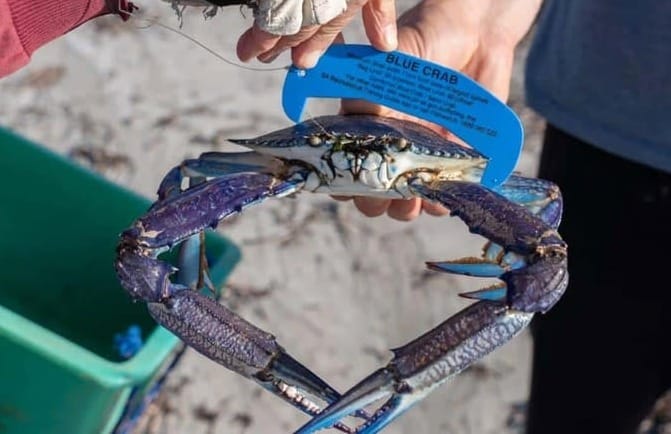
To put those numbers in context: under Western Australian law, a blue swimmer crab cannot legally be kept unless its carapace measures at least 12.7 centimetres across.
In other words, the crabs used by much of the global soft-shell industry are smaller than what a recreational fisher in WA is legally allowed to take home.
The science behind why
The reason is biological, not unethical. Younger crabs moult far more frequently than mature ones.
During peak growing seasons, juvenile crabs may shed their shells every few weeks, while adult crabs do so far less often.
For commercial farmers, this is the entire economic basis of the industry — younger crabs offer more harvestable moulting events per kilogram of grown stock.
Crab biology also makes the timing brutal. Once a crab moults, the shell begins hardening within hours.
Commercial soft-shell farms in Indonesia, Vietnam and Myanmar maintain near-constant monitoring — sometimes hourly — to catch the crab in the narrow window before its new shell calcifies.
Where Australia's soft shell crab actually comes from
According to global export records, the world's three top soft-shell crab supplier countries are Indonesia, Myanmar and Vietnam.
Australia is the world's second-largest importer of soft shell crab, behind only the United States, according to Volza shipment data.
Vietnamese exporter VAFCO publishes its standard sizing classifications openly: Medium (3.5 to 4 inches, roughly 89 to 101 millimetres), Hotels (4 to 4.5 inches, 101 to 114 millimetres), Primes (4.5 to 5 inches, 114 to 127 millimetres), Jumbos (5 to 5.5 inches, 127 to 140 millimetres), and Whales (over 5.5 inches, 140 millimetres-plus).
Stop and read those numbers again.
The most commonly imported sizes — Mediums, Hotels and Primes — are smaller than the minimum legal size for keeping a blue swimmer crab caught recreationally in Western Australia.
This does not mean restaurants are doing anything illegal.
The crabs are caught and farmed in countries with different fisheries laws — or in many cases, no minimum size requirements at all.
Once legally imported into Australia, they are legitimate commercial product.
But the disconnect between what Australian fisheries law protects on one side of the supply chain — and what Australian diners pay $20 to $30 to eat on the other — is real, measurable, and not a topic the industry seems eager to discuss.
The sustainability question
The Australian Centre for International Agricultural Research has been tracking the issue for more than two decades.
Its 2004 working paper on mud crab aquaculture in Australia and South-East Asia warned that "difficulties with obtaining wild caught juveniles for farming operations, plus concerns of further over-exploitation, have led to major investment in research into hatchery techniques."
A more recent assessment of soft-shell crab production in Indonesia found that "juveniles for stocking [are] sourced mainly from the wild," with major soft-shell farms operating in regions including South Sulawesi and Central Java.
The Frontiers research warned that "uncontrolled crab fishing is not sustainable, as it leads to overharvest and threatens the health of the wild crab population."
The Perth situation
Perth's restaurant menus carry soft shell crab in dozens of forms — battered and tossed in chilli at Lotus Garden Padbury, salted egg yolk at multiple Chinese restaurants, across Northbridge venues, salads at Mount Lawley spots, and tempura-style across Mandurah's seafood eateries.
These dishes are entirely legal.
The crabs entering Australian wholesale supply chains pass through biosecurity inspection and are sold under standard import classifications.
But the industry's preferred terminology — "soft shell crab" — does considerable work to obscure what diners are actually being served.
A more transparent description, scientifically accurate, would be: "juvenile crab harvested at sub-adult stage in the moments after moulting."
But that phrasing wouldn't sell as well on a menu. However, it is closer to the truth.
So if you ask if the soft shell crab on Perth's tables might really be the kind of juvenile crab that fisheries officers are fining people for taking from the Peel Inlet, the answer is: biologically, yes.
The legal frameworks differ. The supply chains differ. But the crab on the plate, in many cases, is a juvenile by any reasonable measure of the word.