'WHERE ARE THE MEN?' | The uncomfortable question hanging over Australia's historic ISIS bride prosecution
Four Australian women and nine children have landed back on home soil after more than a decade living within and alongside the territory of the Islamic State in Syria.

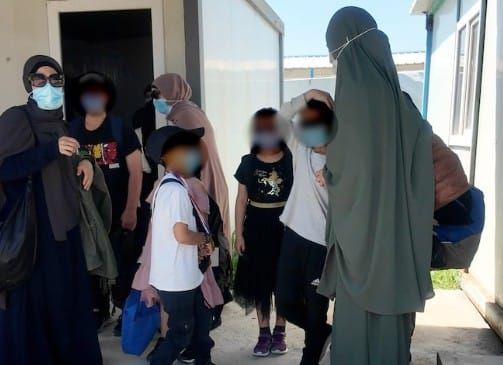
The women — Kawsar Abbas, 53, her daughter Zeinab Ahmed, 31, and former Sydney nursing student Janai Safar, 32 — arrived in Australia on May 7, the latest in a wave of repatriations from the Roj detention camp in north-east Syria. By May 8, all three had appeared in court.
All three were refused bail.
The fourth woman who returned on the same Melbourne flight — Zahra Ahmed, 33, widow of senior Australian ISIS recruiter Muhammad Zahab — was not arrested.
The Australian Federal Police has confirmed she remains the subject of an active and ongoing investigation. She was reportedly bundled into a waiting minibus by men dressed in black who shielded her face from waiting cameras.
The crimes against humanity charges
The Melbourne arrests are the most significant. Kawsar Abbas and her daughter Zeinab face charges under Division 268 of the Australian Criminal Code — the section that codifies crimes against humanity into domestic Australian law.
Kawsar Abbas has been charged with four offences:
- Enslavement
- Possessing a slave
- Using a slave
- Engaging in slave trading
Each charge carries a maximum sentence of 25 years — a combined exposure of up to 100 years. Zeinab faces two charges of enslavement and using a slave, also carrying potential 25-year maximums.
The AFP alleges the Abbas family purchased a Yazidi woman known as Tayseer as a domestic slave for USD$10,000 and held her in the family home in Syria for more than a year.
A second Yazidi survivor, Sarab, has told investigators she was brought to the same home as a 13-year-old "trial slave" — the family assessing her work over three days before returning her to her ISIS captor.
Both women have spoken to the AFP. Both are prepared to testify.
The third woman, Janai Safar, has been charged in Sydney under separate counter-terrorism provisions — entering or remaining in a declared area under the control of a terrorist organisation, and being a member of a terrorist organisation.
Each carries a maximum sentence of 10 years. She appeared via audio-visual link from prison in green prison clothing and a white hijab, with her lawyer telling the court her involvement with IS had effectively ended in March 2017.
ANU international law expert Donald Rothwell has confirmed the case is "completely untested" before Australian courts and will raise significant legal challenges around international evidence, witness protection and legal precedent.
The Yazidi genocide context
The two witnesses at the centre of the case are survivors of one of the worst genocides of the 21st century. In August 2014, ISIS launched a systematic assault on the Yazidi homeland in Sinjar, northern Iraq.
The United Nations has confirmed approximately 5,000 Yazidi men were killed and around 10,800 Yazidi women and girls were abducted and trafficked.
ISIS commanders registered captured women and girls, photographed them and categorised them by age and marital status. They issued pamphlets to fighters detailing the rules of slave ownership.
They used Telegram and other online platforms to buy and sell women, and opened a dedicated trafficking route between Iraq and Syria.
The $10,000 the Abbas family allegedly paid for Tayseer went directly into that system.
 WTV
WTV
Where are the men?
What sets the Australian arrests apart is the absence of male accountability. Every male family member who joined ISIS is either dead or in foreign custody, with no extradition arrangements in place.
Mohammed Ahmad — Kawsar's husband — is currently in a Syrian jail. Tayseer alleges he raped her repeatedly.
He has not been charged in Australia and cannot be extradited. The Abbas family's two sons died fighting for IS.
Zahra's husband Muhammad Zahab, considered by Australian security officials to be the most senior IS recruiter ever produced by Australia, was killed in an airstrike in 2018. Zeinab's husband Dawood Elmir died on the battlefield in 2016.
Why now, and at whose expense
The repatriation of these women was not a deliberate Australian Government initiative. It was forced by collapsing circumstances on the ground in Syria.
The Assad regime fell in December 2024. The new Syrian government had no interest in continuing to house foreign ISIS-linked families.
The US Trump administration cut $117 million in humanitarian aid to north-east Syria in early 2025, threatening the operational viability of the Roj and Al Hol detention camps that had housed the families since 2019.
The Albanese Government issued the women Australian passports earlier this year but has publicly insisted it did not seek or facilitate their return — a position that has drawn significant scrutiny given a passport cannot be issued without some level of government processing.
The taxpayer question
With none of the women holding Australian assets or income after more than a decade in Syrian camps, all three are almost certain to qualify for Legal Aid funding.
The financial and merits tests for Victoria Legal Aid and NSW Legal Aid would, on standard published criteria, support funded defence in cases of this severity.
The Australian taxpayer will, in all likelihood, fund their defence.
 WTV
WTV
The historic significance
Australia has prosecuted terrorism cases before. It has prosecuted foreign fighters. It has prosecuted ISIS members.
But never before has an Australian court been asked to assess charges of enslavement, possessing a slave, using a slave and slave trading — the offences that sit at the very top of the international hierarchy of criminal conduct.
The next court appearances are expected within weeks. The trials, when they come, will be among the most legally and politically consequential in modern Australian history.
For the survivors who lived through the worst of what ISIS did — and for the Australian women who allegedly profited from it — the courtroom is now where this story will be told.