'WHILE QANTAS BICKERS, SIA REWARDS' | Singapore Airlines hands staff a 7.45-month bonus
Singapore Airlines has once again set the global standard for how a profitable airline should treat its workforce — announcing a profit-sharing bonus equivalent to 7.45 months of salary for every employee.

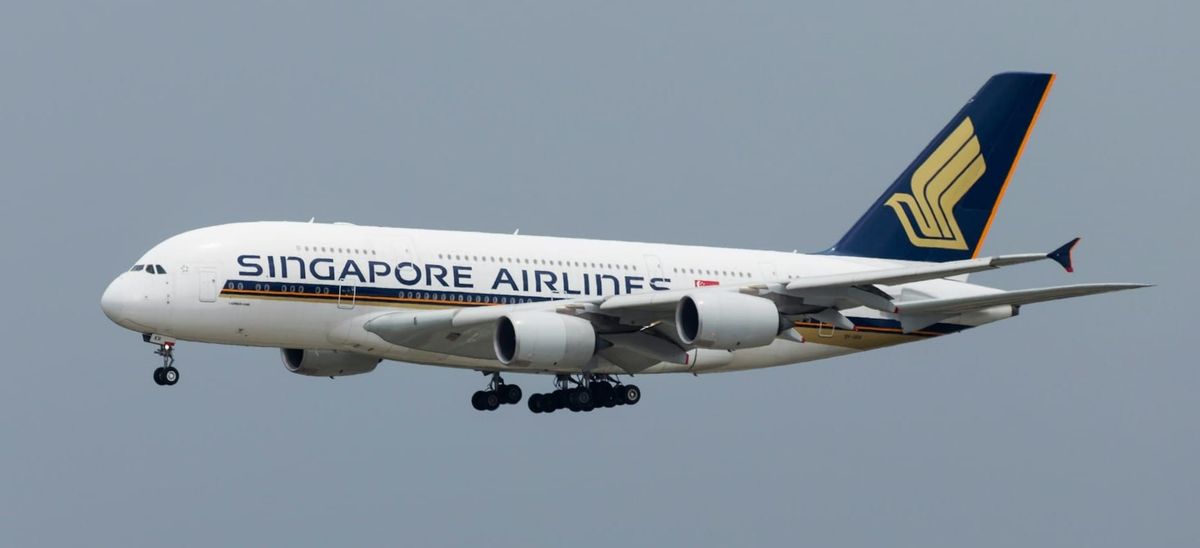
For context, that bonus alone is worth more than half a year's pay. For a flight attendant on a Singapore Airlines base salary of around S$45,000, the bonus represents an extra S$28,000 landing in their bank account in a single payout.
For pilots earning multiples of that base, the figures stretch into six-figure windfalls.
The 7.45-month bonus follows a 7.94-month payout last year, a 6.65-month bonus the year before that (with an additional 1.5 months "ex-gratia" payment recognising staff sacrifices during COVID-19), and is now the third consecutive year SIA has paid bonuses approaching eight months of salary.
SIA Chief Executive Goh Choon Phong confirmed the bonus in a staff announcement after the airline delivered profits that beat analyst estimates of S$2.4 billion.
Revenue hit a record S$19.5 billion, with the carrier carrying record passenger numbers and benefiting from buoyant Asian travel demand.
The airline's bonus formula is no act of corporate charity. It is a contractually agreed long-standing profit-sharing arrangement between SIA management and its staff unions — a binding mathematical relationship between airline profit and employee reward, built into the airline's operating model.
Contrast that with Qantas
For Australian airline workers, the contrast could hardly be sharper.
Qantas posted a full-year underlying pre-tax profit of $1.39 billion in its most recent results — its second straight year of billion-dollar-plus profitability.
Yet the bonus arrangements offered to its workforce sit in a different universe to those of its Singaporean peer.
Most Qantas employees receive performance bonuses worth a fraction of their base salary — typically in the range of 5 to 15 per cent of annual pay, capped by performance metrics, conditional on company targets, and often subject to discretionary executive sign-off.
Translated into months, that's about three to four weeks of salary, not seven and a half months.
Even the much-publicised $5,000 "thank you" bonus paid to staff by Qantas in 2023 — celebrated by management as a generous gesture — represented less than two weeks of salary for most workers.
Pilots and engineers do receive separate enterprise bargaining outcomes that can include profit-related elements, but nothing approaching the structured, contractual, multi-month profit-share built into SIA's compensation model.
The cultural and structural divide
Why the difference? The answer lies in three structural factors that have shaped each airline's relationship with its workforce.
The first is ownership and governance. Singapore Airlines is majority owned by Temasek Holdings, the Singapore Government's investment arm.
Temasek has historically taken a long-term, stakeholder-aligned view of corporate performance — treating sustainable workforce relations as part of long-term shareholder return. Qantas, by contrast, is a publicly listed company facing constant short-term pressure from institutional investors and analysts focused on quarterly margins and dividends.
The second is the union relationship. Singapore's tripartite labour model — government, business and unions working in formal partnership — produces collective agreements that lock profit-sharing formulas into binding multi-year arrangements.
The SIA bonus is not a discretionary management decision. It is a contract. Australian industrial relations, by contrast, has been marked by years of confrontation between Qantas and its unions, including high-profile disputes over outsourcing, illegal sackings, and stalled enterprise bargaining outcomes.
The third is brand strategy. Singapore Airlines has built its entire global reputation on customer service excellence delivered by happy, well-trained, well-paid staff. SIA cabin crew are routinely ranked the best in the world by Skytrax.
The airline's leadership has explicitly framed staff investment as a competitive moat — a deliberate strategic choice. Qantas, by contrast, has spent the past five years cycling through brand crises, including the illegal sacking of 1,700 ground staff, ACCC action over selling tickets on cancelled flights, and a torrid public-relations period under former CEO Alan Joyce.
The lesson Australian workers won't soon forget
The optics of the SIA bonus announcement have not been lost on Australian aviation workers, with social media reaction in the past 48 hours fierce.
"Singapore Airlines workers get nearly 8 months' bonus. Qantas workers get a thank-you card and the threat of outsourcing," one viral post observed.
The comparison is not entirely fair — SIA and Qantas operate in different markets, with different cost bases, different regulatory environments and different workforce structures.
But the underlying message is unmistakable. One airline has built a long-term, contractually binding profit-sharing model with its workforce that delivers consistent multi-month bonuses every year regardless of management's mood. The other has not.
The bottom line
Singapore Airlines made S$2.78 billion last year and is giving more than half a year's salary back to every employee.
Qantas made $1.39 billion and is, by comparison, returning a small slice of that to its staff while continuing to defend itself in court over the way it has treated workers in the past.
For Australian aviation workers watching their Singaporean counterparts pocket five-figure bonuses, the question is no longer whether profitable airlines can afford to share.
The question is why one major Asia-Pacific carrier has chosen to — and the other still has not.