10 YEARS ON: How the decision to kill community TV left a trail of broken signals
The Australian Government announced in September 2014 that all community television licences would be abolished by the end of 2015. The decision was then framed as an inevitable transition for local TV channels.

Malcolm Turnbull, then Communications Minister, announced the end of community television licences in September 2014, later amending the deadline by a year to December 2016 just weeks after becoming Prime Minister.
It was a major pivot towards an online future for a sector Turnbull believed had run its course on the traditional airwaves.
A decade later, the jury is still out.
What followed was a drawn-out, chaotic retreat punctuated by last-minute reprieves, political horse-trading and the quiet deaths of stations that had served their communities for a generation.
Television Sydney (TVS) was the first casualty, ceasing transmission on 20 December 2015 after almost ten years on air and was never replaced to this day.
Brisbane's 31 Digital followed, going dark on 28 February 2017, even as the government granted yet another extension the sector never benefited from.
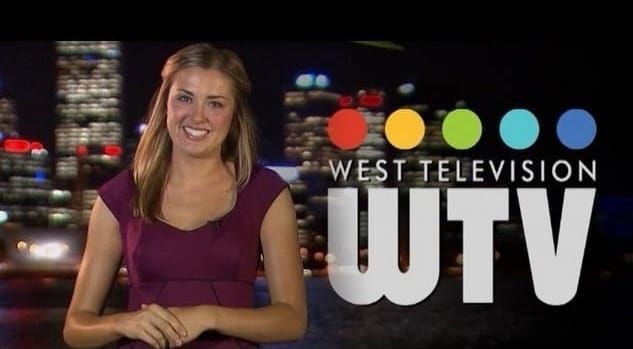
Perth's West TV held on until February 2020 before it too surrendered its free-to-air signal.
The government's stated reason of freeing up broadcast spectrum for next-generation technologies including 4K television drew immediate scepticism.
Channel 31 general manager Matthew Field told ABC's Media Watch that if stations were switched off, their spectrum "will remain vacant for a number of years" — a claim that proved largely accurate as no significant new services emerged to fill the void.
Melbourne's C31 and Adelaide's Channel 44 survived through a succession of last-minute extensions, with South Australian Senator Rex Patrick securing a three-year reprieve in June 2021.
A new government ultimately granted both stations an indefinite extension in 2024, subject to six months' notice if their spectrum is required for other purposes.
Those two survivors have since adapted, launching the CTV+ streaming platform in August 2021 with a mobile app following in 2022 and a smart TV app in November 2025.
But for Sydney, Brisbane and Perth, there was no second act. The pivot-to-online model the government championed proved largely unworkable for underfunded, community organisations without the broadcast audience to anchor their digital presence.
Advocates had long argued that community stories are "often lost in the more glaring noise that commercial or major networks pick up" and that community TV provided a vital platform for voices that would otherwise go unheard.
Whether those voices have found a sustainable home online a decade on remains an open question.
For the cities that lost their local TV stations entirely for a Government-led digital transition that never materialized, the answer is almost certainly no.