'WHAT NOW?' | The ISIS brides have landed in Australia
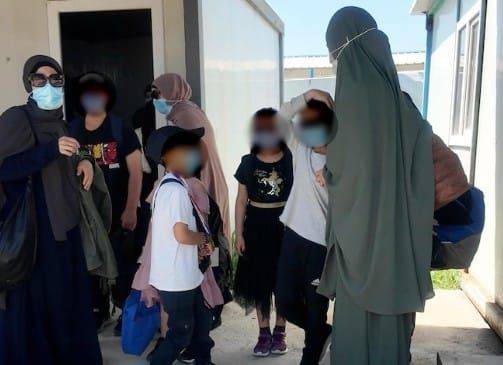
After years of diplomatic stalemate, four Australian women and nine children with links to the Islamic State have arrived back on Australian soil — touching down in Sydney and Melbourne via Doha late Thursday evening.

The four women — collectively dubbed in the media as the "ISIS brides" — are Australian nationals who travelled to Syria years ago to join ISIS fighters, in some cases at the height of the so-called caliphate's power.
When the Islamic State collapsed, they and their children were held in prison camps in north-east Syria administered by the Kurdish-led Syrian Democratic Forces (SDF).
For nearly seven years, Australia, like many other governments, was content to leave the women and children in SDF custody indefinitely. But the geopolitical landscape forced its hand.
The fall of Bashar al-Assad's regime in December 2024 — toppled in a lightning-fast offensive by rebels and jihadi factions — handed control of Syria to a new government led by former al-Qaeda officer Ahmed al-Sharaa.
The new regime has been at odds with the SDF, which had refused to surrender autonomy.
With pressure mounting on both sides, the Roj prison camp where most of the Australian detainees were held began releasing women and children back to their countries of origin in February 2026.
The political back-and-forth
Prime Minister Anthony Albanese initially refused to accept any returnees, with his government stating that Australia's national security and the safety of its citizens would always come first.
"People in this cohort need to know that if they have committed a crime and if they return to Australia they will be met with the full force of the law," the Albanese Government said in February.
But by April, the politics had shifted. After weeks of legal advice, behind-the-scenes diplomacy and growing pressure from human rights organisations and family members already in Australia, the Government quietly accepted that the return of at least some of the cohort was inevitable.
A larger group attempted to fly out of Damascus earlier this year but was stopped following intervention from Australian authorities.
The 13 who arrived this week represent the first wave of a broader cohort of 34 Australian citizens released from Roj.
What happens now?
Home Affairs Minister Tony Burke and Australian Federal Police Commissioner Krissy Barrett held a joint press conference on Wednesday, just hours before the group's arrival, to lay out exactly what awaits the returnees on Australian soil.
"Some individuals will be arrested and charged," Commissioner Barrett confirmed. "Some will face continued investigations when they arrive in Australia."
The AFP indicated that arrests are expected to take place at the airport itself. Where charges are not laid immediately, Commissioner Barrett confirmed continued investigations into individual cases would follow — including reviews of any potential offences under Australia's foreign incursions and counter-terrorism legislation.
The fate of the children — many of whom were born in Syria and have never set foot in Australia — is markedly different.
"Children who return in the cohort will be asked to undergo community integration programs, therapeutic support, and countering violent extremist programs," Commissioner Barrett said.
Some of the children travelling with the group are reportedly the grandchildren of the women — meaning two generations have grown up entirely within the camps and will need significant trauma-informed support to integrate into Australian society.
Why now?
There are three major reasons this homecoming is happening at this specific moment, despite years of resistance from successive Australian governments.
First, the SDF has been gradually losing the capacity and political will to keep detaining the women and children indefinitely. The collapse of the Assad regime and the rise of al-Sharaa's government have destabilised the camps and forced repatriation conversations forward globally.
Second, international human rights pressure has intensified. Both the United Nations and a series of NGO advocates have argued that the prolonged detention of the children — many of whom were infants when their mothers were captured — is unconscionable, and that Australia has obligations under international law to bring them home.
Third, the political calculus shifted in Canberra. With other Western governments — including Germany, France, the United Kingdom and Canada — already repatriating their own nationals from the camps, Australia faced increasing diplomatic pressure to fall in line.
The unanswered questions
The Coalition has demanded full transparency from the Albanese Government on the identities of those returning, the specific charges against them, and where exactly they will be settled.
Senator Jane Hume and other opposition voices have also questioned the Government's repeated insistence that it was "doing nothing" to facilitate the return — pointing out that the women and children could not have boarded commercial flights without Australian government services, including passport facilitation and consular assistance.
Some of the women have argued they were trafficked, deceived by partners, or travelled to keep their families together rather than as committed ideological supporters of ISIS. Others, prosecutors are likely to allege, made informed and willing choices to support the caliphate.
Each case will now be assessed individually — first by police, then by Commonwealth prosecutors, and ultimately by Australian courts.
The bigger picture
The arrival of the ISIS brides marks the beginning, not the end, of Australia's confrontation with this issue. Twenty-one more citizens are still in the Roj camp awaiting their own potential return.